

Earn More by Sharing What You Love
Do you create content for developers working with .NET, C#, Java, Python, or Node.js? Turn your expertise into extra income!
Tim Corey
8m 20s
Working across multiple machines is a constant in cross-platform development. You have a command saved on your Windows desktop that you need on your Linux box. A config file lives on your laptop but you're testing on a VM. The usual workarounds (emailing yourself, uploading to cloud storage, configuring network shares) all add friction to something that should be trivial.
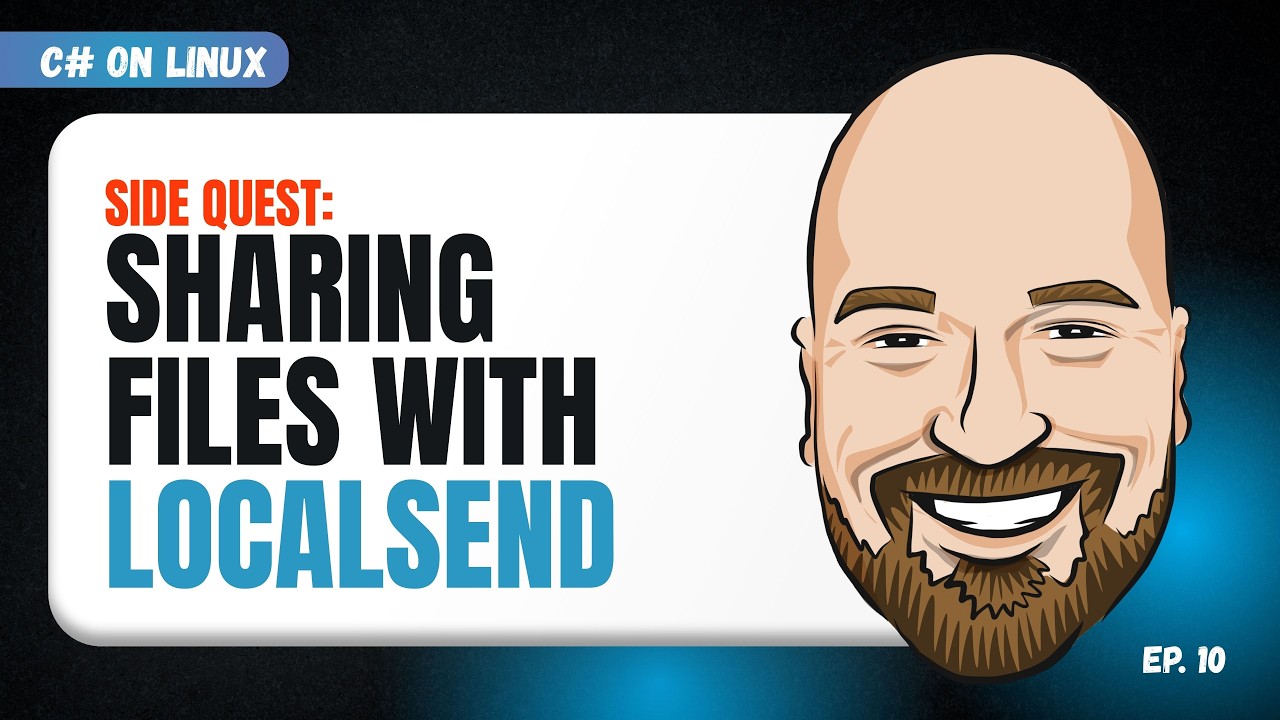
In his video "LocalSend: AirDrop for Every Platform", Tim Corey introduces LocalSend, a free, open-source tool that transfers files and text between any devices on your local network without touching the cloud. We'll cover installing it on Linux via Flatpak, configuring device names, and sending both text and files between a Windows machine and a Linux desktop. If you work across operating systems (or even just between a phone and a computer), this is a practical addition to your toolkit.
[0:00 - 0:30] Before introducing the tool, Tim runs through the common workarounds developers use and why each one falls short. Microsoft Teams has a self-messaging channel, but it requires a Teams installation on both ends. Emailing yourself works but clutters your inbox and adds unnecessary steps. Network shares handle the job but involve configuring permissions, which gets complicated across different operating systems.
What developers actually need is something closer to Apple's AirDrop: select the content, pick the destination device, and send. LocalSend fills that role for Windows, macOS, Linux, iOS, and Android.
[1:01 - 1:46] LocalSend is available at localsend.org and handles device-to-device sharing over your LAN without routing anything through external servers. Everything stays on your network.
The key distinction from cloud-based alternatives (OneDrive, Google Drive, Dropbox) is that no data leaves your local environment. For developers working with source code, credentials, or large binary files, that's a meaningful privacy and speed advantage. Tim emphasizes that the tool isn't sponsored; it's a genuine recommendation based on how useful it is for the cross-platform development workflow covered in the series.
[2:46 - 3:54] The LocalSend download page offers binaries for every platform. On Linux, the recommended approach is to use a package manager. Tim chooses the Flatpak installation, which requires two commands.
The website provides a copy button, so the full install command can be pasted directly into the terminal:
// Flatpak install (two commands combined)
flatpak install flathub app.localsend.localsend_app
// Flatpak install (two commands combined)
flatpak install flathub app.localsend.localsend_appThe installer prompts for confirmation twice: once to approve the package and once to accept the required changes. After that, LocalSend is installed and ready to launch.
Once installed, pin it to the taskbar for quick access. Tim closes the terminal-launched instance and reopens it from the application menu so it runs independently.
[4:11 - 4:36] By default, LocalSend assigns a random device name (something like "Fantastic Orange"). Since you'll be picking devices from a list when sending content, a descriptive name matters. Tim opens Settings and changes his to "Tim's Linux Desktop," then restarts the LocalSend server to apply the change.
The server restart is worth understanding. LocalSend runs a lightweight server on each device, which is how other devices on the network discover it. Every instance is both a server (discoverable and ready to receive) and a client (able to browse and send to other devices). When you close LocalSend, the server stops and your device disappears from the network.
[4:48 - 5:42] With LocalSend running on both the Linux desktop and a Windows PC, each device appears in the other's device list. Tim demonstrates the simplest use case: sending a text snippet from Windows to Linux.
On the Windows machine, he types "hello world" into the text field, selects the Linux desktop from the nearby devices list, and hits send. The text appears instantly on the Linux machine with a copy button ready. For developers transferring shell commands, connection strings, or code snippets between machines, this eliminates the round-trip through email or cloud storage entirely.
[5:42 - 7:04] File transfer works the same way. From the Windows machine, Tim selects a TIFF headshot image (925 MB) and sends it to the Linux desktop. The receiving machine prompts to accept the incoming transfer before downloading begins.
That acceptance prompt is a deliberate security feature. Devices on your network can't push files to your machine without your explicit approval. Once accepted, the file downloads directly between the two machines. No cloud servers are involved, which means transfer speed is limited only by your LAN bandwidth, not your internet connection. A 925 MB file over a gigabit network takes seconds rather than the minutes it would take through a cloud upload/download cycle.
[7:24 - 8:00] Tim highlights several scenarios where LocalSend proves useful beyond the two-desktop setup shown in the video. If you're running a VM and don't want to configure shared folders with the host, LocalSend handles the transfer without any VM-specific setup. Phone-to-desktop transfers replace the usual flow of uploading to OneDrive and downloading again. And for the Docker and SQL workflow coming in the next episode, having a quick way to move commands and config files between machines removes one more source of friction.
The tool supports files, folders, text, and clipboard contents. Open it when you need it, close it when you don't. There's no background service running when the application isn't active.
[7:51 - 8:11] LocalSend solves a problem that most developers work around rather than fix. The install takes under a minute, the interface is self-explanatory, and it covers every platform combination you're likely to encounter. For anyone working across operating systems (which is the entire premise of this C# on Linux series), it removes a category of daily friction that adds up over time.
[8:11 - 8:20] To sum it up: LocalSend is a free, open-source, cross-platform file and text transfer tool that works over your local network with no cloud dependency. Install it via Flatpak on Linux, set a recognizable device name, and start sending content between any combination of Windows, macOS, Linux, iOS, and Android devices.
If you're setting up a cross-platform development environment, this is one of the first utilities worth installing alongside your SDK and editor.
Example Tip: If you frequently transfer shell commands or code snippets between machines, use LocalSend's text mode instead of saving to a file first. Paste the command on the sending machine, send it, and copy it on the receiving end. It's faster than creating a temporary file and avoids leaving orphaned text files on both machines.
Watch full video on his YouTube Channel and gain more insights on cross-platform development workflows.
Do you create content for developers working with .NET, C#, Java, Python, or Node.js? Turn your expertise into extra income!
Join our newsletter, you’ll get exclusive access on article updates. We value your privacy

