


How to Create an Excel File in C# (.NET Tutorial)

IronXL は、 Microsoft Office や Interop に依存せずに、プログラムで XLSX スプレッドシートを作成、読み取り、編集できる強力な C# および .NET Excel ライブラリです。 .NET 8、.NET 9、.NET Core、.NET Framework をサポートし、Windows、Linux、macOS、Azure、AWS で実行されます。
このチュートリアルでは、セル値の設定、書式の適用、数式の追加、XLSX、CSV へのエクスポートなど、C# で完全な Excel ブックを構築する手順を、ステップバイステップのコード例とともに説明します。
クイックスタート: Excel ファイルを作成する
IronXLを使用してすぐに新しいExcelファイルを立ち上げましょう。フォーマットを選択し、シートを追加し、任意のセル値を設定して保存するだけです。 これは、直感的な API 呼び出しと相互運用性の問題を一切伴わずに XLSX ファイルを生成する最も簡単な方法です。

最小限のワークフロー(5ステップ)
- IronXL C#ライブラリをダウンロードしてインストールする
- .NETプロジェクトをセットアップする
WorkbookおよびWorksheetを作成- セルの値、書式、数式を設定する
- Excelファイルを保存する
IronXLとは、なぜExcelファイル作成に使用するのか?
IronXL は、.NET で Excel スプレッドシート ファイルの読み取り、編集、作成を可能にする直感的な C# & VB Excel API で、優れたパフォーマンスを発揮します。 従来のアプローチとは異なり、Microsoft OfficeのインストールやExcel Interopの使用が不要で、デプロイがよりシンプルで信頼性があります。
IronXLは、.NET 9、.NET 8、.NET Core、.NET Framework、Xamarin、モバイル、Linux、macOS、およびAzure環境を完全にサポートしています。
IronXLの機能
- .NET開発チームからの直接のサポート
- Microsoft Visual Studioでの迅速なインストール
- 開発用に無料。 $999 からのライセンス
Excelファイルをすばやく作成して保存する方法は?
NuGetからIronXLをインストールするか、DLLを直接ダウンロードしてください。 WorkBook クラスはすべての Excel 操作のエントリポイントであり、WorkSheet クラスは個々のシートを操作するためのメソッドを提供します。詳細な手順は、以下のステップ 1 から始まります。
How Do I Install the IronXL C# Library?
Visual Studio の NuGet パッケージ マネージャー経由で IronXL をインストールするか、パッケージ マネージャー コンソールを使用します。
Install-Package IronXL.Excel
NuGet パッケージ マネージャーには、[プロジェクト] メニューから、またはソリューション エクスプローラーでプロジェクトを右クリックしてアクセスします。
!["NuGet パッケージの管理"オプションが表示された Visual Studio の [プロジェクト] メニュー](/img/tutorials/create-excel-file-net/project-menu.png)
図 3 - プロジェクトメニューからのNuGetパッケージマネージャーアクセス
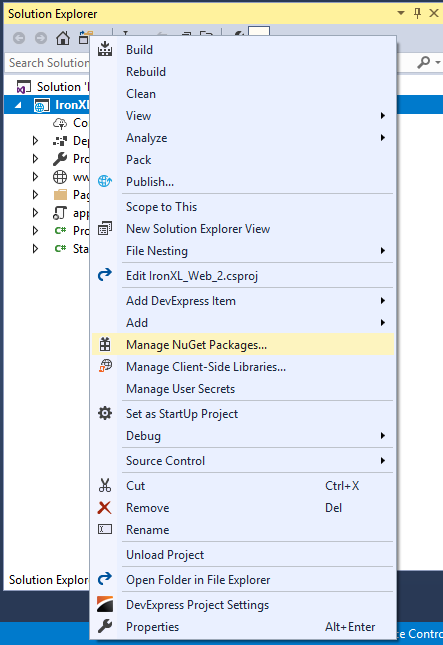
図 4 - ソリューションエクスプローラの右クリックコンテキストメニュー
パッケージ一覧で IronXL.Excel を探し、"インストール"をクリックしてください。

図 5 - NuGet パッケージマネージャーを介して IronXL.Excel をインストール
あるいは、IronXL DLL を直接ダウンロードし、ソリューション エクスプローラー > 参照 > IronXL.dll を参照してプロジェクトに参照として追加することもできます。
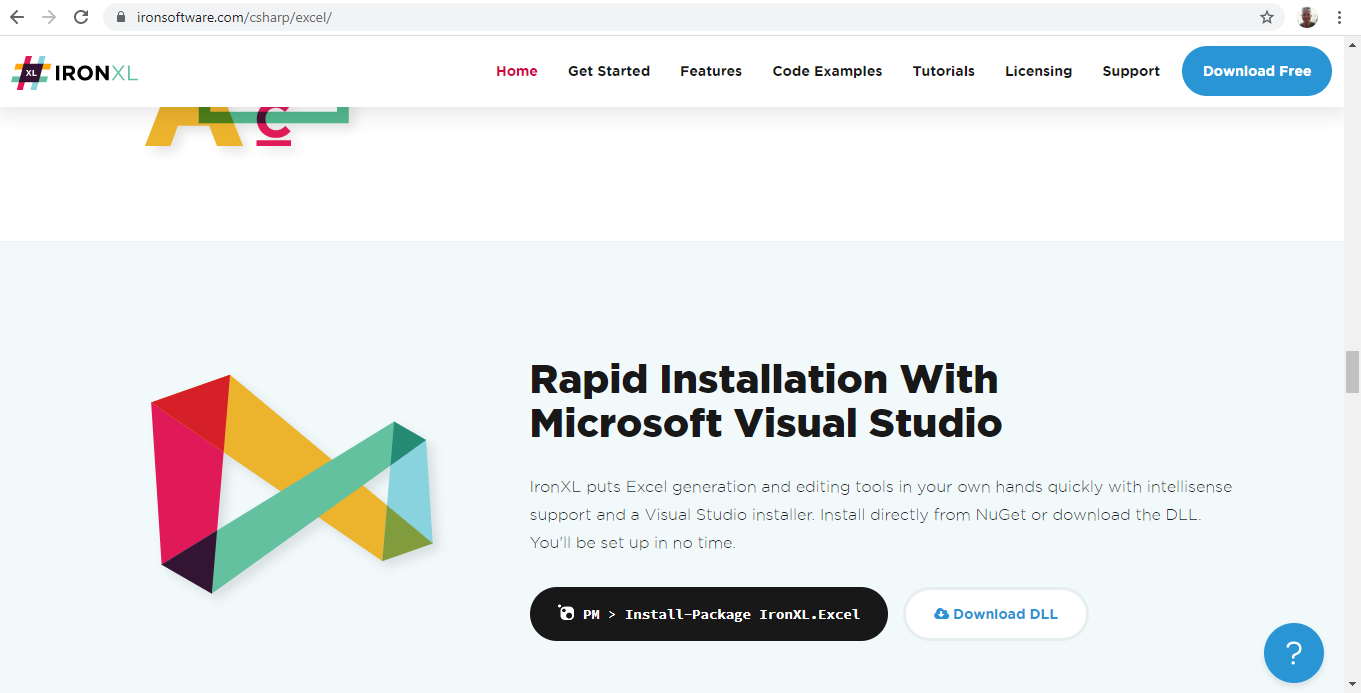
図 6 - 公式ウェブサイトから IronXL ライブラリをダウンロード
.NET プロジェクトをセットアップするにはどうすればよいですか?
IronXL は、コンソール アプリ、ASP.NET Web アプリ、API、デスクトップ ツールなど、あらゆる.NET プロジェクト タイプで動作します。 以下の例では ASP.NET Web アプリケーションを使用していますが、プロセスはすべてのプロジェクト テンプレートで同じです。
以下の手順に従って、ASP.NETサイトを作成します:
- Visual Studioを開く 2.ファイル > 新規プロジェクトをクリック
- プロジェクトタイプ一覧でVisual C#の下のWebを選択
-
ASP.NET Webアプリケーションを選択
![Visual Studio の [新しいプロジェクト] ダイアログで ASP.NET Web アプリケーションが選択された状態](/img/tutorials/create-excel-file-net/new-project-asp-net.png)
図1 – Create new ASP.NET project
- OKをクリック
-
Web Formsテンプレートを選択
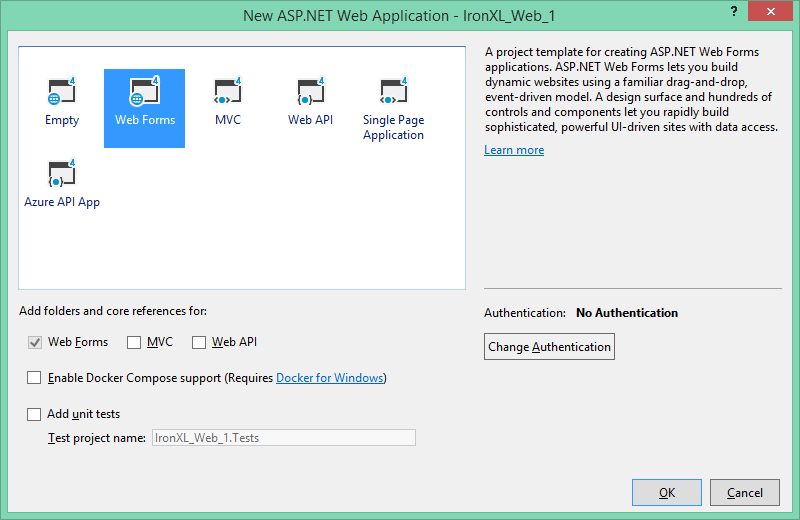
図2 – Select Web Forms template
- OKをクリック
プロジェクトが準備できたら、IronXLをインストールしてプログラムでExcelファイルを作成し始めましょう。
How Do I Create an Excel Workbook in C#?
IronXLを使った新しいExcelワークブックの作成は1行のコードのみ必要です:
using IronXL;

// Create workbook with XLSX format (recommended for modern Excel)
WorkBook workbook = WorkBook.Create(ExcelFileFormat.XLSX);

// Alternative: Create legacy XLS format for older Excel versions
WorkBook legacyWorkbook = WorkBook.Create(ExcelFileFormat.XLS);
using IronXL;
// Create workbook with XLSX format (recommended for modern Excel)
WorkBook workbook = WorkBook.Create(ExcelFileFormat.XLSX);
// Alternative: Create legacy XLS format for older Excel versions
WorkBook legacyWorkbook = WorkBook.Create(ExcelFileFormat.XLS);Imports IronXL
' Create workbook with XLSX format (recommended for modern Excel)
Private workbook As WorkBook = WorkBook.Create(ExcelFileFormat.XLSX)
' Alternative: Create legacy XLS format for older Excel versions
Private legacyWorkbook As WorkBook = WorkBook.Create(ExcelFileFormat.XLS)Create メソッドは、XLS(Excel 97-2003)および XLSX(Excel 2007 以降)の両方の形式をサポートしています。 より良いパフォーマンスと小さなファイルサイズを得るためにXLSXを推奨します。
- XLSX : すべての最新バージョンのExcel(2007以降)に推奨されます。ファイルサイズが小さく、パフォーマンスが向上します。
- XLS : Excel 97~2003との互換性のためのレガシー形式
ワークブックにワークシートを追加するにはどうすればよいですか?
ワークシートを追加するのは簡単です:
// Create a worksheet with custom name for budget tracking
WorkSheet budgetSheet = workbook.CreateWorkSheet("2020 Budget");

// Add multiple worksheets for different purposes
WorkSheet salesSheet = workbook.CreateWorkSheet("Sales Data");
WorkSheet inventorySheet = workbook.CreateWorkSheet("Inventory");

// Access existing worksheet by name
WorkSheet existingSheet = workbook.GetWorkSheet("2020 Budget");
// Create a worksheet with custom name for budget tracking
WorkSheet budgetSheet = workbook.CreateWorkSheet("2020 Budget");
// Add multiple worksheets for different purposes
WorkSheet salesSheet = workbook.CreateWorkSheet("Sales Data");
WorkSheet inventorySheet = workbook.CreateWorkSheet("Inventory");
// Access existing worksheet by name
WorkSheet existingSheet = workbook.GetWorkSheet("2020 Budget");' Create a worksheet with custom name for budget tracking
Dim budgetSheet As WorkSheet = workbook.CreateWorkSheet("2020 Budget")
' Add multiple worksheets for different purposes
Dim salesSheet As WorkSheet = workbook.CreateWorkSheet("Sales Data")
Dim inventorySheet As WorkSheet = workbook.CreateWorkSheet("Inventory")
' Access existing worksheet by name
Dim existingSheet As WorkSheet = workbook.GetWorkSheet("2020 Budget")ワークブックは1つ以上のワークシートを含みます。 各ワークシートは行と列で構成され、それらの交差点にはセルがあります。 ワークブックに新しいシートを追加するには、CreateWorkSheet メソッドを使用します。
WorkBook.CreateWorkSheet(String): 指定されたタブ名を持つ新しいシートを追加しますWorkSheet: 名前で既存のシートを取得します- シート名はワークブック内で一意である必要があります
Excel でセルの値を設定するにはどうすればいいですか?
セルの値を手動で設定するにはどうすればよいですか?
個別のセルの値の設定は直感的なExcel風の構文を使用します:
// Set month names in first row for annual budget spreadsheet
workSheet["A1"].Value = "January";
workSheet["B1"].Value = "February";
workSheet["C1"].Value = "March";
workSheet["D1"].Value = "April";
workSheet["E1"].Value = "May";
workSheet["F1"].Value = "June";
workSheet["G1"].Value = "July";
workSheet["H1"].Value = "August";
workSheet["I1"].Value = "September";
workSheet["J1"].Value = "October";
workSheet["K1"].Value = "November";
workSheet["L1"].Value = "December";

// Set different data types - IronXL handles conversion automatically
workSheet["A2"].Value = 1500.50m;  // Decimal for currency
workSheet["A3"].Value = DateTime.Now;  // Date values
workSheet["A4"].Value = true;  // Boolean values
// Set month names in first row for annual budget spreadsheet
workSheet["A1"].Value = "January";
workSheet["B1"].Value = "February";
workSheet["C1"].Value = "March";
workSheet["D1"].Value = "April";
workSheet["E1"].Value = "May";
workSheet["F1"].Value = "June";
workSheet["G1"].Value = "July";
workSheet["H1"].Value = "August";
workSheet["I1"].Value = "September";
workSheet["J1"].Value = "October";
workSheet["K1"].Value = "November";
workSheet["L1"].Value = "December";
// Set different data types - IronXL handles conversion automatically
workSheet["A2"].Value = 1500.50m; // Decimal for currency
workSheet["A3"].Value = DateTime.Now; // Date values
workSheet["A4"].Value = true; // Boolean values' Set month names in first row for annual budget spreadsheet
workSheet("A1").Value = "January"
workSheet("B1").Value = "February"
workSheet("C1").Value = "March"
workSheet("D1").Value = "April"
workSheet("E1").Value = "May"
workSheet("F1").Value = "June"
workSheet("G1").Value = "July"
workSheet("H1").Value = "August"
workSheet("I1").Value = "September"
workSheet("J1").Value = "October"
workSheet("K1").Value = "November"
workSheet("L1").Value = "December"
' Set different data types - IronXL handles conversion automatically
workSheet("A2").Value = 1500.50D ' Decimal for currency
workSheet("A3").Value = DateTime.Now ' Date values
workSheet("A4").Value = True ' Boolean valuesValue プロパティは、文字列、数値、日付、ブール値など、さまざまなデータ型を受け入れます。 IronXLはデータタイプに基づいてセルを自動的にフォーマットします。
セルの値を動的に設定するにはどうすればよいですか?
動的な値設定はデータ駆動型アプリケーションに最適です:
// Initialize random number generator for sample data
Random r = new Random();

// Populate cells with random budget data for each month
for (int i = 2; i <= 11; i++)
{
    // Set different budget categories with increasing ranges
    workSheet[$"A{i}"].Value = r.Next(1, 1000);     // Office Supplies
    workSheet[$"B{i}"].Value = r.Next(1000, 2000);  // Utilities
    workSheet[$"C{i}"].Value = r.Next(2000, 3000);  // Rent
    workSheet[$"D{i}"].Value = r.Next(3000, 4000);  // Salaries
    workSheet[$"E{i}"].Value = r.Next(4000, 5000);  // Marketing
    workSheet[$"F{i}"].Value = r.Next(5000, 6000);  // IT Services
    workSheet[$"G{i}"].Value = r.Next(6000, 7000);  // Travel
    workSheet[$"H{i}"].Value = r.Next(7000, 8000);  // Training
    workSheet[$"I{i}"].Value = r.Next(8000, 9000);  // Insurance
    workSheet[$"J{i}"].Value = r.Next(9000, 10000); // Equipment
    workSheet[$"K{i}"].Value = r.Next(10000, 11000); // Research
    workSheet[$"L{i}"].Value = r.Next(11000, 12000); // Misc
}

// Alternative: Set range of cells with same value
workSheet["A13:L13"].Value = 0; // Initialize totals row
// Initialize random number generator for sample data
Random r = new Random();
// Populate cells with random budget data for each month
for (int i = 2; i <= 11; i++)
{
// Set different budget categories with increasing ranges
workSheet[$"A{i}"].Value = r.Next(1, 1000); // Office Supplies
workSheet[$"B{i}"].Value = r.Next(1000, 2000); // Utilities
workSheet[$"C{i}"].Value = r.Next(2000, 3000); // Rent
workSheet[$"D{i}"].Value = r.Next(3000, 4000); // Salaries
workSheet[$"E{i}"].Value = r.Next(4000, 5000); // Marketing
workSheet[$"F{i}"].Value = r.Next(5000, 6000); // IT Services
workSheet[$"G{i}"].Value = r.Next(6000, 7000); // Travel
workSheet[$"H{i}"].Value = r.Next(7000, 8000); // Training
workSheet[$"I{i}"].Value = r.Next(8000, 9000); // Insurance
workSheet[$"J{i}"].Value = r.Next(9000, 10000); // Equipment
workSheet[$"K{i}"].Value = r.Next(10000, 11000); // Research
workSheet[$"L{i}"].Value = r.Next(11000, 12000); // Misc
}
// Alternative: Set range of cells with same value
workSheet["A13:L13"].Value = 0; // Initialize totals row' Initialize random number generator for sample data
Dim r As New Random()
' Populate cells with random budget data for each month
For i As Integer = 2 To 11
' Set different budget categories with increasing ranges
workSheet($"A{i}").Value = r.Next(1, 1000) ' Office Supplies
workSheet($"B{i}").Value = r.Next(1000, 2000) ' Utilities
workSheet($"C{i}").Value = r.Next(2000, 3000) ' Rent
workSheet($"D{i}").Value = r.Next(3000, 4000) ' Salaries
workSheet($"E{i}").Value = r.Next(4000, 5000) ' Marketing
workSheet($"F{i}").Value = r.Next(5000, 6000) ' IT Services
workSheet($"G{i}").Value = r.Next(6000, 7000) ' Travel
workSheet($"H{i}").Value = r.Next(7000, 8000) ' Training
workSheet($"I{i}").Value = r.Next(8000, 9000) ' Insurance
workSheet($"J{i}").Value = r.Next(9000, 10000) ' Equipment
workSheet($"K{i}").Value = r.Next(10000, 11000) ' Research
workSheet($"L{i}").Value = r.Next(11000, 12000) ' Misc
Next i
' Alternative: Set range of cells with same value
workSheet("A13:L13").Value = 0 ' Initialize totals row文字列補間 ($"...") を使用すると、セルを動的に参照することが容易になります。 Item インデクサーは、個々のセルと範囲の両方をサポートしています。
データベースから Excel にデータを入力するにはどうすればよいですか?
データベースからExcelにデータをロードすることは一般的な要件です:
using System.Data;
using System.Data.SqlClient;
using IronXL;

// Database connection setup for retrieving sales data
string connectionString = @"Data Source=ServerName;Initial Catalog=SalesDB;Integrated Security=true";
string query = "SELECT ProductName, Quantity, UnitPrice, TotalSales FROM MonthlySales";

// Create DataSet to hold query results
DataSet salesData = new DataSet();

using (SqlConnection connection = new SqlConnection(connectionString))
using (SqlDataAdapter adapter = new SqlDataAdapter(query, connection))
{
    // Fill DataSet with sales information
    adapter.Fill(salesData);
}

// Write headers for database columns
workSheet["A1"].Value = "Product Name";
workSheet["B1"].Value = "Quantity";
workSheet["C1"].Value = "Unit Price";
workSheet["D1"].Value = "Total Sales";

// Apply header formatting
workSheet["A1:D1"].Style.Font.Bold = true;
workSheet["A1:D1"].Style.SetBackgroundColor("#4472C4");
workSheet["A1:D1"].Style.Font.FontColor = "#FFFFFF";

// Populate Excel with database records
DataTable salesTable = salesData.Tables[0];
for (int row = 0; row < salesTable.Rows.Count; row++)
{
    int excelRow = row + 2; // Start from row 2 (after headers)

    workSheet[$"A{excelRow}"].Value = salesTable.Rows[row]["ProductName"].ToString();
    workSheet[$"B{excelRow}"].Value = Convert.ToInt32(salesTable.Rows[row]["Quantity"]);
    workSheet[$"C{excelRow}"].Value = Convert.ToDecimal(salesTable.Rows[row]["UnitPrice"]);
    workSheet[$"D{excelRow}"].Value = Convert.ToDecimal(salesTable.Rows[row]["TotalSales"]);

    // Format currency columns
    workSheet[$"C{excelRow}"].FormatString = "$#,##0.00";
    workSheet[$"D{excelRow}"].FormatString = "$#,##0.00";
}

// Add summary row with formulas
int summaryRow = salesTable.Rows.Count + 2;
workSheet[$"A{summaryRow}"].Value = "TOTAL";
workSheet[$"B{summaryRow}"].Formula = $"=SUM(B2:B{summaryRow-1})";
workSheet[$"D{summaryRow}"].Formula = $"=SUM(D2:D{summaryRow-1})";
using System.Data;
using System.Data.SqlClient;
using IronXL;
// Database connection setup for retrieving sales data
string connectionString = @"Data Source=ServerName;Initial Catalog=SalesDB;Integrated Security=true";
string query = "SELECT ProductName, Quantity, UnitPrice, TotalSales FROM MonthlySales";
// Create DataSet to hold query results
DataSet salesData = new DataSet();
using (SqlConnection connection = new SqlConnection(connectionString))
using (SqlDataAdapter adapter = new SqlDataAdapter(query, connection))
{
// Fill DataSet with sales information
adapter.Fill(salesData);
}
// Write headers for database columns
workSheet["A1"].Value = "Product Name";
workSheet["B1"].Value = "Quantity";
workSheet["C1"].Value = "Unit Price";
workSheet["D1"].Value = "Total Sales";
// Apply header formatting
workSheet["A1:D1"].Style.Font.Bold = true;
workSheet["A1:D1"].Style.SetBackgroundColor("#4472C4");
workSheet["A1:D1"].Style.Font.FontColor = "#FFFFFF";
// Populate Excel with database records
DataTable salesTable = salesData.Tables[0];
for (int row = 0; row < salesTable.Rows.Count; row++)
{
int excelRow = row + 2; // Start from row 2 (after headers)
workSheet[$"A{excelRow}"].Value = salesTable.Rows[row]["ProductName"].ToString();
workSheet[$"B{excelRow}"].Value = Convert.ToInt32(salesTable.Rows[row]["Quantity"]);
workSheet[$"C{excelRow}"].Value = Convert.ToDecimal(salesTable.Rows[row]["UnitPrice"]);
workSheet[$"D{excelRow}"].Value = Convert.ToDecimal(salesTable.Rows[row]["TotalSales"]);
// Format currency columns
workSheet[$"C{excelRow}"].FormatString = "$#,##0.00";
workSheet[$"D{excelRow}"].FormatString = "$#,##0.00";
}
// Add summary row with formulas
int summaryRow = salesTable.Rows.Count + 2;
workSheet[$"A{summaryRow}"].Value = "TOTAL";
workSheet[$"B{summaryRow}"].Formula = $"=SUM(B2:B{summaryRow-1})";
workSheet[$"D{summaryRow}"].Formula = $"=SUM(D2:D{summaryRow-1})";Imports System.Data
Imports System.Data.SqlClient
Imports IronXL
' Database connection setup for retrieving sales data
Private connectionString As String = "Data Source=ServerName;Initial Catalog=SalesDB;Integrated Security=true"
Private query As String = "SELECT ProductName, Quantity, UnitPrice, TotalSales FROM MonthlySales"
' Create DataSet to hold query results
Private salesData As New DataSet()
Using connection As New SqlConnection(connectionString)
Using adapter As New SqlDataAdapter(query, connection)
' Fill DataSet with sales information
adapter.Fill(salesData)
End Using
End Using
' Write headers for database columns
workSheet("A1").Value = "Product Name"
workSheet("B1").Value = "Quantity"
workSheet("C1").Value = "Unit Price"
workSheet("D1").Value = "Total Sales"
' Apply header formatting
workSheet("A1:D1").Style.Font.Bold = True
workSheet("A1:D1").Style.SetBackgroundColor("#4472C4")
workSheet("A1:D1").Style.Font.FontColor = "#FFFFFF"
' Populate Excel with database records
Dim salesTable As DataTable = salesData.Tables(0)
For row As Integer = 0 To salesTable.Rows.Count - 1
Dim excelRow As Integer = row + 2 ' Start from row 2 (after headers)
workSheet($"A{excelRow}").Value = salesTable.Rows(row)("ProductName").ToString()
workSheet($"B{excelRow}").Value = Convert.ToInt32(salesTable.Rows(row)("Quantity"))
workSheet($"C{excelRow}").Value = Convert.ToDecimal(salesTable.Rows(row)("UnitPrice"))
workSheet($"D{excelRow}").Value = Convert.ToDecimal(salesTable.Rows(row)("TotalSales"))
' Format currency columns
workSheet($"C{excelRow}").FormatString = "$#,##0.00"
workSheet($"D{excelRow}").FormatString = "$#,##0.00"
Next row
' Add summary row with formulas
Dim summaryRow As Integer = salesTable.Rows.Count + 2
workSheet($"A{summaryRow}").Value = "TOTAL"
workSheet($"B{summaryRow}").Formula = $"=SUM(B2:B{summaryRow-1})"
workSheet($"D{summaryRow}").Formula = $"=SUM(D2:D{summaryRow-1})"この例は、データベースからのExcelデータの読み取り、フォーマットの適用、および計算のための数式の使用を示しています。 NumberFormat プロパティを使用すると、Excelと同様に数値の書式をカスタマイズできます。
Excel のセルに書式を適用するにはどうすればよいですか?
Excel で背景色を設定するにはどうすればよいでしょうか?
セルのスタイリングは可読性と視覚的魅力を強化します:
// Set header row background to light gray using hex color
workSheet["A1:L1"].Style.SetBackgroundColor("#d3d3d3");

// Apply different colors for data categorization
workSheet["A2:A11"].Style.SetBackgroundColor("#E7F3FF"); // Light blue for January
workSheet["B2:B11"].Style.SetBackgroundColor("#FFF2CC"); // Light yellow for February

// Highlight important cells with bold colors
workSheet["L12"].Style.SetBackgroundColor("#FF0000"); // Red for totals
workSheet["L12"].Style.Font.FontColor = "#FFFFFF"; // White text

// Create alternating row colors for better readability
for (int row = 2; row <= 11; row++)
{
    if (row % 2 == 0)
    {
        workSheet[$"A{row}:L{row}"].Style.SetBackgroundColor("#F2F2F2");
    }
}
// Set header row background to light gray using hex color
workSheet["A1:L1"].Style.SetBackgroundColor("#d3d3d3");
// Apply different colors for data categorization
workSheet["A2:A11"].Style.SetBackgroundColor("#E7F3FF"); // Light blue for January
workSheet["B2:B11"].Style.SetBackgroundColor("#FFF2CC"); // Light yellow for February
// Highlight important cells with bold colors
workSheet["L12"].Style.SetBackgroundColor("#FF0000"); // Red for totals
workSheet["L12"].Style.Font.FontColor = "#FFFFFF"; // White text
// Create alternating row colors for better readability
for (int row = 2; row <= 11; row++)
{
if (row % 2 == 0)
{
workSheet[$"A{row}:L{row}"].Style.SetBackgroundColor("#F2F2F2");
}
}' Set header row background to light gray using hex color
workSheet("A1:L1").Style.SetBackgroundColor("#d3d3d3")
' Apply different colors for data categorization
workSheet("A2:A11").Style.SetBackgroundColor("#E7F3FF") ' Light blue for January
workSheet("B2:B11").Style.SetBackgroundColor("#FFF2CC") ' Light yellow for February
' Highlight important cells with bold colors
workSheet("L12").Style.SetBackgroundColor("#FF0000") ' Red for totals
workSheet("L12").Style.Font.FontColor = "#FFFFFF" ' White text
' Create alternating row colors for better readability
For row As Integer = 2 To 11
If row Mod 2 = 0 Then
workSheet($"A{row}:L{row}").Style.SetBackgroundColor("#F2F2F2")
End If
Next rowSetBackgroundColor メソッドは 16 進数のカラーコードを受け付けます。 背景色とフォントカラーを組み合わせてプロフェッショナルな外観のスプレッドシートを作成します。
Excel で境界線を作成するにはどうすればよいでしょうか?
枠線はデータ領域を定義し、構造を改善します:
using IronXL;
using IronXL.Styles;

// Create header border - thick bottom line to separate from data
workSheet["A1:L1"].Style.TopBorder.SetColor("#000000");
workSheet["A1:L1"].Style.TopBorder.Type = BorderType.Thick;
workSheet["A1:L1"].Style.BottomBorder.SetColor("#000000");
workSheet["A1:L1"].Style.BottomBorder.Type = BorderType.Thick;

// Add right border to last column
workSheet["L2:L11"].Style.RightBorder.SetColor("#000000");
workSheet["L2:L11"].Style.RightBorder.Type = BorderType.Medium;

// Create bottom border for data area
workSheet["A11:L11"].Style.BottomBorder.SetColor("#000000");
workSheet["A11:L11"].Style.BottomBorder.Type = BorderType.Medium;

// Apply complete border around summary section
var summaryRange = workSheet["A12:L12"];
summaryRange.Style.TopBorder.Type = BorderType.Double;
summaryRange.Style.BottomBorder.Type = BorderType.Double;
summaryRange.Style.LeftBorder.Type = BorderType.Thin;
summaryRange.Style.RightBorder.Type = BorderType.Thin;
summaryRange.Style.SetBorderColor("#0070C0"); // Blue borders
using IronXL;
using IronXL.Styles;
// Create header border - thick bottom line to separate from data
workSheet["A1:L1"].Style.TopBorder.SetColor("#000000");
workSheet["A1:L1"].Style.TopBorder.Type = BorderType.Thick;
workSheet["A1:L1"].Style.BottomBorder.SetColor("#000000");
workSheet["A1:L1"].Style.BottomBorder.Type = BorderType.Thick;
// Add right border to last column
workSheet["L2:L11"].Style.RightBorder.SetColor("#000000");
workSheet["L2:L11"].Style.RightBorder.Type = BorderType.Medium;
// Create bottom border for data area
workSheet["A11:L11"].Style.BottomBorder.SetColor("#000000");
workSheet["A11:L11"].Style.BottomBorder.Type = BorderType.Medium;
// Apply complete border around summary section
var summaryRange = workSheet["A12:L12"];
summaryRange.Style.TopBorder.Type = BorderType.Double;
summaryRange.Style.BottomBorder.Type = BorderType.Double;
summaryRange.Style.LeftBorder.Type = BorderType.Thin;
summaryRange.Style.RightBorder.Type = BorderType.Thin;
summaryRange.Style.SetBorderColor("#0070C0"); // Blue bordersImports IronXL
Imports IronXL.Styles
' Create header border - thick bottom line to separate from data
workSheet("A1:L1").Style.TopBorder.SetColor("#000000")
workSheet("A1:L1").Style.TopBorder.Type = BorderType.Thick
workSheet("A1:L1").Style.BottomBorder.SetColor("#000000")
workSheet("A1:L1").Style.BottomBorder.Type = BorderType.Thick
' Add right border to last column
workSheet("L2:L11").Style.RightBorder.SetColor("#000000")
workSheet("L2:L11").Style.RightBorder.Type = BorderType.Medium
' Create bottom border for data area
workSheet("A11:L11").Style.BottomBorder.SetColor("#000000")
workSheet("A11:L11").Style.BottomBorder.Type = BorderType.Medium
' Apply complete border around summary section
Dim summaryRange = workSheet("A12:L12")
summaryRange.Style.TopBorder.Type = BorderType.Double
summaryRange.Style.BottomBorder.Type = BorderType.Double
summaryRange.Style.LeftBorder.Type = BorderType.Thin
summaryRange.Style.RightBorder.Type = BorderType.Thin
summaryRange.Style.SetBorderColor("#0070C0") ' Blue bordersIronXLは様々な枠線のタイプ(薄い、中くらい、太い、ダブル、点線、破線)をサポートしています。 各枠線の側面は独立してスタイリングできます。
How Do I Use Excel Formulas in C#?
IronXLは自動計算を備えた強力な数式のサポートを提供します:
// Use built-in aggregation functions for ranges
decimal sum = workSheet["A2:A11"].Sum();
decimal avg = workSheet["B2:B11"].Avg();
decimal max = workSheet["C2:C11"].Max();
decimal min = workSheet["D2:D11"].Min();

// Assign calculated values to cells
workSheet["A12"].Value = sum;
workSheet["B12"].Value = avg;
workSheet["C12"].Value = max;
workSheet["D12"].Value = min;

// Or use Excel formulas directly
workSheet["A12"].Formula = "=SUM(A2:A11)";
workSheet["B12"].Formula = "=AVERAGE(B2:B11)";
workSheet["C12"].Formula = "=MAX(C2:C11)";
workSheet["D12"].Formula = "=MIN(D2:D11)";

// Complex formulas with multiple functions
workSheet["E12"].Formula = "=IF(SUM(E2:E11)>50000,\"Over Budget\",\"On Track\")";
workSheet["F12"].Formula = "=SUMIF(F2:F11,\">5000\")";

// Percentage calculations
workSheet["G12"].Formula = "=G11/SUM(G2:G11)*100";
workSheet["G12"].FormatString = "0.00%";

// Ensure all formulas calculate
workSheet.EvaluateAll();
// Use built-in aggregation functions for ranges
decimal sum = workSheet["A2:A11"].Sum();
decimal avg = workSheet["B2:B11"].Avg();
decimal max = workSheet["C2:C11"].Max();
decimal min = workSheet["D2:D11"].Min();
// Assign calculated values to cells
workSheet["A12"].Value = sum;
workSheet["B12"].Value = avg;
workSheet["C12"].Value = max;
workSheet["D12"].Value = min;
// Or use Excel formulas directly
workSheet["A12"].Formula = "=SUM(A2:A11)";
workSheet["B12"].Formula = "=AVERAGE(B2:B11)";
workSheet["C12"].Formula = "=MAX(C2:C11)";
workSheet["D12"].Formula = "=MIN(D2:D11)";
// Complex formulas with multiple functions
workSheet["E12"].Formula = "=IF(SUM(E2:E11)>50000,\"Over Budget\",\"On Track\")";
workSheet["F12"].Formula = "=SUMIF(F2:F11,\">5000\")";
// Percentage calculations
workSheet["G12"].Formula = "=G11/SUM(G2:G11)*100";
workSheet["G12"].FormatString = "0.00%";
// Ensure all formulas calculate
workSheet.EvaluateAll();' Use built-in aggregation functions for ranges
Dim sum As Decimal = workSheet("A2:A11").Sum()
Dim avg As Decimal = workSheet("B2:B11").Avg()
Dim max As Decimal = workSheet("C2:C11").Max()
Dim min As Decimal = workSheet("D2:D11").Min()
' Assign calculated values to cells
workSheet("A12").Value = sum
workSheet("B12").Value = avg
workSheet("C12").Value = max
workSheet("D12").Value = min
' Or use Excel formulas directly
workSheet("A12").Formula = "=SUM(A2:A11)"
workSheet("B12").Formula = "=AVERAGE(B2:B11)"
workSheet("C12").Formula = "=MAX(C2:C11)"
workSheet("D12").Formula = "=MIN(D2:D11)"
' Complex formulas with multiple functions
workSheet("E12").Formula = "=IF(SUM(E2:E11)>50000,""Over Budget"",""On Track"")"
workSheet("F12").Formula = "=SUMIF(F2:F11,"">5000"")"
' Percentage calculations
workSheet("G12").Formula = "=G11/SUM(G2:G11)*100"
workSheet("G12").FormatString = "0.00%"
' Ensure all formulas calculate
workSheet.EvaluateAll()Range クラスは、Max、および Min といった、迅速な計算を行うためのメソッドを提供します。 より複雑なシナリオでは、Formula プロパティを使用して、Excel の数式を直接設定してください。
{t:(IronXLに組み込まれている.Min()メソッドを優先してください。これらは型安全であり、数式の構文エラーを防ぐことができます。)}
ワークシートと印刷のプロパティを設定するにはどうすればよいですか?
個別のワークシートを保護し、行と列を固定し、印刷フォーマットオプションを設定するためにIronXLを使用します。
ワークシートのプロパティを構成するにはどうすればよいでしょうか?
ワークシートを保護し、表示オプションを制御します:
// Protect worksheet with password to prevent unauthorized changes
workSheet.ProtectSheet("SecurePassword123");

// Freeze panes to keep headers visible while scrolling
workSheet.CreateFreezePane(0, 1); // Freeze first row
// workSheet.CreateFreezePane(1, 1); // Freeze first row and column

// Set worksheet visibility options
workSheet.ViewState = WorkSheetViewState.Visible; // or Hidden, VeryHidden

// Configure gridlines and headers
workSheet.ShowGridLines = true;
workSheet.ShowRowColHeaders = true;

// Set zoom level for better viewing
workSheet.Zoom = 85; // 85% zoom
// Protect worksheet with password to prevent unauthorized changes
workSheet.ProtectSheet("SecurePassword123");
// Freeze panes to keep headers visible while scrolling
workSheet.CreateFreezePane(0, 1); // Freeze first row
// workSheet.CreateFreezePane(1, 1); // Freeze first row and column
// Set worksheet visibility options
workSheet.ViewState = WorkSheetViewState.Visible; // or Hidden, VeryHidden
// Configure gridlines and headers
workSheet.ShowGridLines = true;
workSheet.ShowRowColHeaders = true;
// Set zoom level for better viewing
workSheet.Zoom = 85; // 85% zoom' Protect worksheet with password to prevent unauthorized changes
workSheet.ProtectSheet("SecurePassword123")
' Freeze panes to keep headers visible while scrolling
workSheet.CreateFreezePane(0, 1) ' Freeze first row
' workSheet.CreateFreezePane(1, 1); // Freeze first row and column
' Set worksheet visibility options
workSheet.ViewState = WorkSheetViewState.Visible ' or Hidden, VeryHidden
' Configure gridlines and headers
workSheet.ShowGridLines = True
workSheet.ShowRowColHeaders = True
' Set zoom level for better viewing
workSheet.Zoom = 85 ' 85% zoomワークシートの保護は誤った変更を防止し、ウィンドウ枠の固定はスクロール中に重要な行や列を表示し続けます。
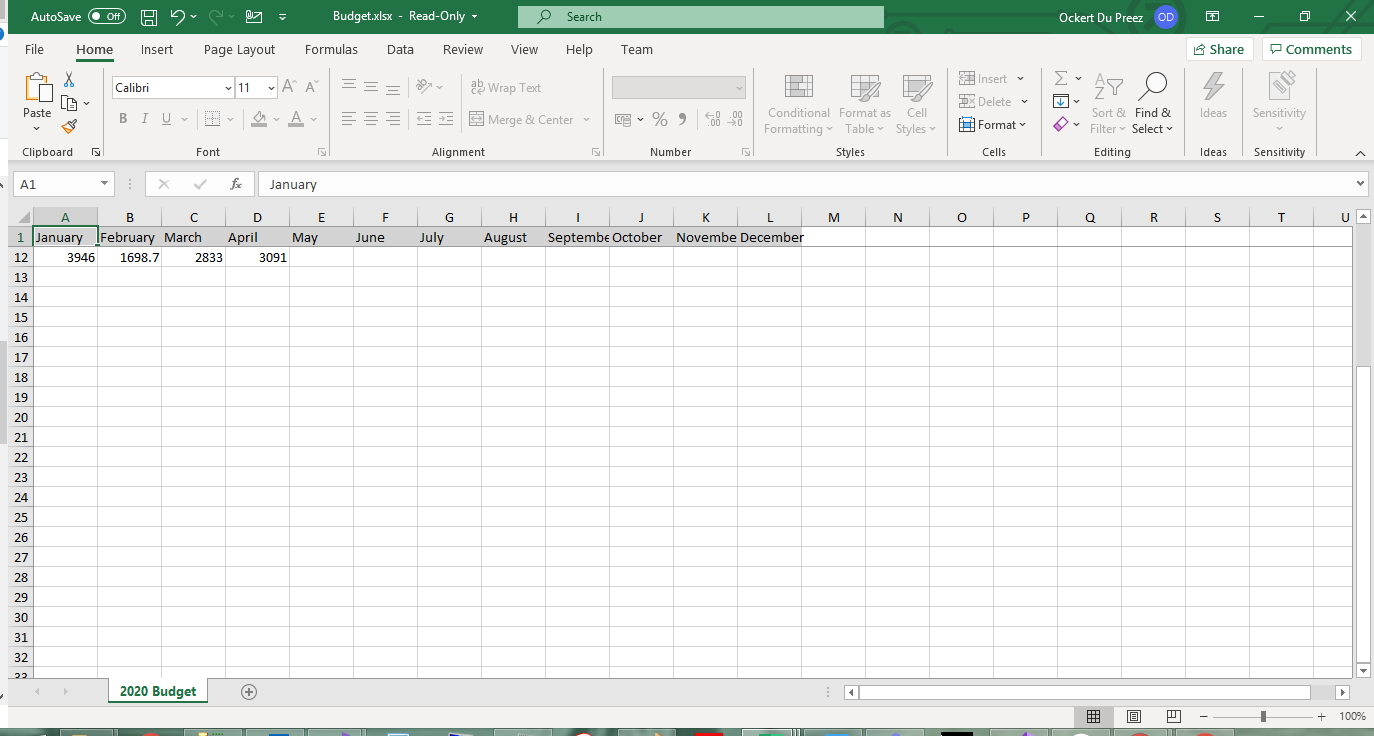
図 7 - フリーズされたヘッダー行はスクロール中も表示され続けます

図 8 - パスワード保護が無許可の編集を防止
ページと印刷の設定を構成するにはどうすればよいですか?
IronXL を通じてプロフェッショナルな印刷オプションをセットアップ:
using IronXL.Printing;

// Define print area to exclude empty cells
workSheet.SetPrintArea("A1:L12");

// Configure page orientation for wide data
workSheet.PrintSetup.PrintOrientation = PrintOrientation.Landscape;

// Set paper size for standard printing
workSheet.PrintSetup.PaperSize = PaperSize.A4;

// Adjust margins for better layout (in inches)
workSheet.PrintSetup.LeftMargin = 0.5;
workSheet.PrintSetup.RightMargin = 0.5;
workSheet.PrintSetup.TopMargin = 0.75;
workSheet.PrintSetup.BottomMargin = 0.75;

// Configure header and footer
workSheet.PrintSetup.HeaderMargin = 0.3;
workSheet.PrintSetup.FooterMargin = 0.3;

// Scale to fit on one page
workSheet.PrintSetup.FitToPage = true;
workSheet.PrintSetup.FitToHeight = 1;
workSheet.PrintSetup.FitToWidth = 1;

// Add print headers/footers
workSheet.Header.Center = "Monthly Budget Report";
workSheet.Footer.Left = DateTime.Now.ToShortDateString();
workSheet.Footer.Right = "Page &P of &N"; // Page numbering
using IronXL.Printing;
// Define print area to exclude empty cells
workSheet.SetPrintArea("A1:L12");
// Configure page orientation for wide data
workSheet.PrintSetup.PrintOrientation = PrintOrientation.Landscape;
// Set paper size for standard printing
workSheet.PrintSetup.PaperSize = PaperSize.A4;
// Adjust margins for better layout (in inches)
workSheet.PrintSetup.LeftMargin = 0.5;
workSheet.PrintSetup.RightMargin = 0.5;
workSheet.PrintSetup.TopMargin = 0.75;
workSheet.PrintSetup.BottomMargin = 0.75;
// Configure header and footer
workSheet.PrintSetup.HeaderMargin = 0.3;
workSheet.PrintSetup.FooterMargin = 0.3;
// Scale to fit on one page
workSheet.PrintSetup.FitToPage = true;
workSheet.PrintSetup.FitToHeight = 1;
workSheet.PrintSetup.FitToWidth = 1;
// Add print headers/footers
workSheet.Header.Center = "Monthly Budget Report";
workSheet.Footer.Left = DateTime.Now.ToShortDateString();
workSheet.Footer.Right = "Page &P of &N"; // Page numberingImports IronXL.Printing
' Define print area to exclude empty cells
workSheet.SetPrintArea("A1:L12")
' Configure page orientation for wide data
workSheet.PrintSetup.PrintOrientation = PrintOrientation.Landscape
' Set paper size for standard printing
workSheet.PrintSetup.PaperSize = PaperSize.A4
' Adjust margins for better layout (in inches)
workSheet.PrintSetup.LeftMargin = 0.5
workSheet.PrintSetup.RightMargin = 0.5
workSheet.PrintSetup.TopMargin = 0.75
workSheet.PrintSetup.BottomMargin = 0.75
' Configure header and footer
workSheet.PrintSetup.HeaderMargin = 0.3
workSheet.PrintSetup.FooterMargin = 0.3
' Scale to fit on one page
workSheet.PrintSetup.FitToPage = True
workSheet.PrintSetup.FitToHeight = 1
workSheet.PrintSetup.FitToWidth = 1
' Add print headers/footers
workSheet.Header.Center = "Monthly Budget Report"
workSheet.Footer.Left = DateTime.Now.ToShortDateString()
workSheet.Footer.Right = "Page &P of &N" ' Page numberingIPrintSetup クラスは、ExcelのPRINT設定に対応した包括的なPRINT設定オプションを提供します。
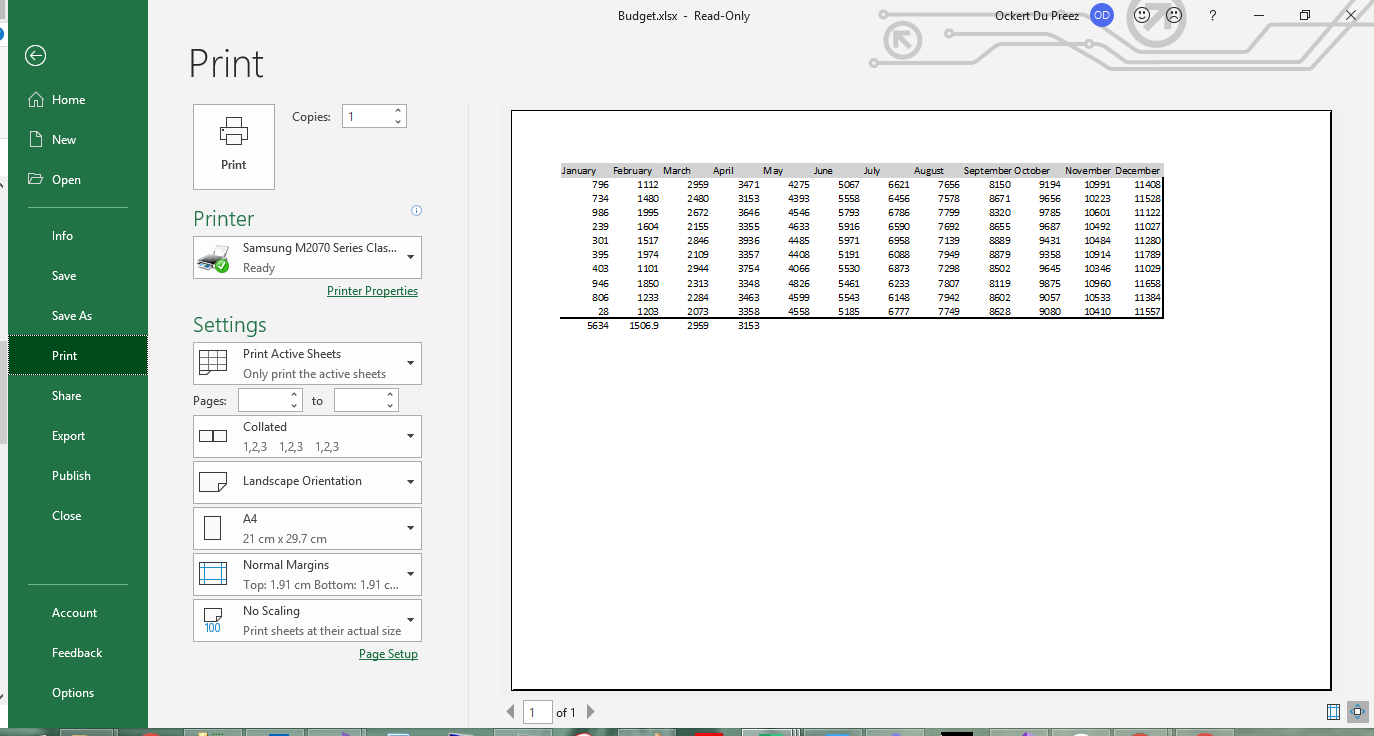
図 9 - 横置きとカスタムマージンを備えた印刷プレビュー
Excel ブックを保存するにはどうすればよいですか?
ワークブックを様々なフォーマットで保存します:
// Save as XLSX (recommended for modern Excel)
workBook.SaveAs("Budget.xlsx");

// Save as XLS for legacy compatibility
workBook.SaveAs("Budget.xls");

// Save as CSV for data exchange
workBook.SaveAsCsv("Budget.csv");

// Save as JSON for web applications
workBook.SaveAsJson("Budget.json");

// Save to stream for web downloads or cloud storage
using (var stream = new MemoryStream())
{
    workBook.SaveAs(stream);
    byte[] excelData = stream.ToArray();
    // Send to client or save to cloud
}

// Save with specific encoding for international characters
workBook.SaveAsCsv("Budget_UTF8.csv", System.Text.Encoding.UTF8);
// Save as XLSX (recommended for modern Excel)
workBook.SaveAs("Budget.xlsx");
// Save as XLS for legacy compatibility
workBook.SaveAs("Budget.xls");
// Save as CSV for data exchange
workBook.SaveAsCsv("Budget.csv");
// Save as JSON for web applications
workBook.SaveAsJson("Budget.json");
// Save to stream for web downloads or cloud storage
using (var stream = new MemoryStream())
{
workBook.SaveAs(stream);
byte[] excelData = stream.ToArray();
// Send to client or save to cloud
}
// Save with specific encoding for international characters
workBook.SaveAsCsv("Budget_UTF8.csv", System.Text.Encoding.UTF8);' Save as XLSX (recommended for modern Excel)
workBook.SaveAs("Budget.xlsx")
' Save as XLS for legacy compatibility
workBook.SaveAs("Budget.xls")
' Save as CSV for data exchange
workBook.SaveAsCsv("Budget.csv")
' Save as JSON for web applications
workBook.SaveAsJson("Budget.json")
' Save to stream for web downloads or cloud storage
Using stream = New MemoryStream()
workBook.SaveAs(stream)
Dim excelData() As Byte = stream.ToArray()
' Send to client or save to cloud
End Using
' Save with specific encoding for international characters
workBook.SaveAsCsv("Budget_UTF8.csv", System.Text.Encoding.UTF8)IronXLはXLSX、XLS、CSV、TSV、JSONを含む複数のエクスポートフォーマットをサポートします。 Save メソッドは、ファイル拡張子から形式を自動的に判別します。
- XLSX / XLS : 書式設定、数式、複数のシートを含む完全な Excel 形式
- CSV : データ交換用のプレーンテキスト - ファイルごとに1シートをエクスポートします
- JSON :Web APIとデータパイプラインの構造化された出力 -ストリーム: メモリ内出力用 - ウェブダウンロードやクラウドストレージに便利
まとめ
このチュートリアルでは、 IronXLを使用して、Microsoft Office に依存せずに C# で Excel ファイルを作成する方法を説明しました。 ワークブック作成、セル操作、フォーマット設定、数式使用、および様々な保存オプションを含む重要なExcel操作を学びました。 IronXL の直感的な API により、.NET 開発者はExcel の自動化を簡単に実行できます。
より高度な機能には、セルを結合する、および チャートを作成するを探索してください。 IronXLを製品で使用する準備ができましたか? 無料トライアルを開始するか、ライセンスオプションを表示します。
次は何をしますか?
C# で Excel ファイルを作成できるようになったので、関連する IronXL 機能を調べてみましょう。
WorkBook``WorkSheet``WorkBook.Create``CreateWorkSheet``CreateWorkSheet("name")``GetWorkSheet("name")``Cell.Value``$"A{i}"``Range``FormatString``Style.SetBackgroundColor``Range``Sum()``Avg()``Max()``Min()``Formula``PrintSetup``SaveAs
よくある質問
Interopを使用せずにC#でExcelファイルを作成するにはどうすればよいですか?
IronXLを使用してInteropなしでExcelファイルを作成できます。これはシンプルなAPIを提供します:WorkBook workBook = WorkBook.Create(ExcelFileFormat.XLSX)。この方法は、Microsoft Officeのインストールを必要とせず、任意 for .NETプラットフォームで動作します。
C#でのExcelファイル作成はどのプラットフォームをサポートしますか?
IronXLはExcelファイルの作成を.NET 10、.NET 9、.NET 8、.NET Core、.NET Framework 4.6.2+でサポートし、Windows、macOS、Linux、Docker、Azure、AWS環境で実行できます。
Excel生成用のC#ライブラリをどのようにインストールしますか?
Visual StudioのNuGetパッケージマネージャーからIronXLをインストールし、コマンドPM> Install-Package IronXL.Excelを使用するか、nuget.orgから直接ダウンロードしてください。
プログラムで新しいExcelワークブックをどのように作成しますか?
IronXLを使用してワークブックを作成し、WorkBook workbook = WorkBook.Create(ExcelFileFormat.XLSX)を使用してからworkbook.CreateWorkSheet("SheetName")でワークシートを追加します。
C#を使用してExcelワークシートのセル値をどのように設定しますか?
IronXLを使用して直感的な構文でセル値を設定します:worksheet["A1"].Value = "Hello World"または範囲を設定します:worksheet["A1:A10"].Value = 100。
プログラムでExcelのセルに書式を適用できますか?
はい、IronXLは背景色(cell.Style.SetBackgroundColor("#FF0000"))、罫線、フォント、数字の書式を含む包括的な書式設定をサポートします。
C#でExcelの数式をどのように使用しますか?
IronXLのFormulaプロパティを使用して数式を適用します:worksheet["A1"].Formula = "=SUM(B1:B10)"、またはrange.Sum()、range.Avg()のような組み込みメソッドを使用します。
パスワードでExcelワークシートをどのように保護しますか?
無許可の変更を防ぐために、worksheet.ProtectSheet("YourPassword")を使用してIronXLのワークシートを保護します。
Excelファイルの印刷設定を構成するにはどうすればよいですか?
IronXLのPrintSetupを使用して印刷プロパティを設定します:worksheet.PrintSetup.PrintOrientation = PrintOrientation.Landscape と worksheet.SetPrintArea("A1:Z100").
Excelブックを異なる形式で保存するにはどうすればよいですか?
IronXLのSaveAsメソッドを使用してブックを保存します:workbook.SaveAs("file.xlsx")はXLSX形式のため、または他の形式のためにSaveAsCsv()、SaveAsJson()を使用します。
データベースからデータを取得してExcelシートにどのように入力しますか?
IronXLを使用してデータベースからデータを取得し、worksheet["A1"].Value = dataFromDatabaseのようなメソッドを使用してセルに設定します。
C#を使用してExcelシートでウインドウ枠の固定をどのように実装しますか?
IronXLを使用してワークシートでウインドウ枠の固定を行います:worksheet.FreezePanes(1, 1)で最上行と最左列をロックし、ナビゲーションを容易にします。


まだスクロールしていますか?
すぐに証拠が欲しいですか? PM > Install-Package IronXL.Excel
サンプルを実行する あなたのデータがスプレッドシートになるのを見る。








 無料で始めましょう
 無料で始めましょう
 無料ライブデモを予約